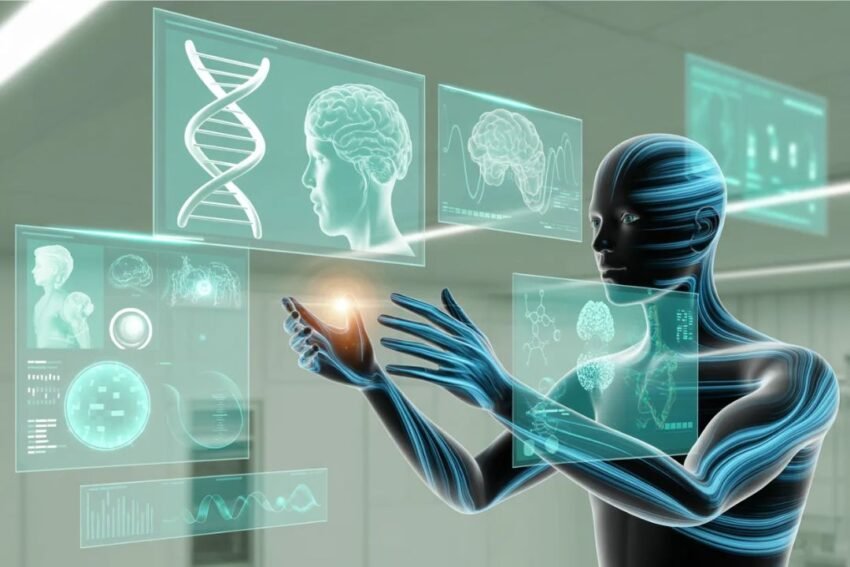
Artificial Intelligence (AI) is no longer a futuristic concept in medicine—it is now a core driver of innovation, efficiency, and patient-centered care. In 2026, AI is deeply embedded in healthcare systems worldwide, reshaping how diseases are diagnosed, treated, and prevented. From predictive analytics to robotic surgery and personalized medicine, AI is revolutionizing every aspect of modern healthcare.
This article explores how AI is transforming healthcare in 2026, including key trends, real-world applications, benefits, challenges, and the future outlook.
Introduction: The Rise of AI in Healthcare
The healthcare industry has historically faced challenges such as rising costs, workforce shortages, delayed diagnoses, and administrative inefficiencies. AI is emerging as a powerful solution to these problems by enabling faster decision-making, improving accuracy, and automating routine tasks.
By 2026, AI has evolved from experimental pilot projects into a foundational infrastructure within healthcare systems. Hospitals, clinics, and digital health platforms are integrating AI into everyday operations, improving both clinical and administrative outcomes.
1. AI-Powered Diagnostics and Early Disease Detection
One of the most significant contributions of AI in healthcare is its ability to enhance diagnostic accuracy. AI algorithms can analyze vast amounts of medical data—such as imaging scans, lab results, and patient histories—faster and more accurately than traditional methods.
Key Advancements:
- AI-assisted radiology and imaging analysis
- Early detection of diseases like cancer, heart conditions, and neurological disorders
- Risk prediction models for chronic illnesses
Recent studies show that AI-assisted breast cancer screening improves early detection rates and reduces late-stage diagnoses.
Impact:
- Faster diagnosis
- Reduced human error
- Improved survival rates
AI is helping clinicians detect diseases at earlier stages, when treatment is more effective and less costly.
2. Personalized Medicine and Treatment Plans
AI is driving a shift from generalized treatment approaches to personalized healthcare. By analyzing genetic data, lifestyle patterns, and medical history, AI systems can recommend customized treatment plans tailored to individual patients.
Examples:
- AI-based drug recommendations
- Precision oncology treatments
- Personalized therapy plans
In 2026, AI-powered therapeutic tools and apps are being used to manage chronic conditions like diabetes and mental health disorders through real-time feedback and adaptive treatment strategies.
Benefits:
- Better patient outcomes
- Higher treatment success rates
- Reduced trial-and-error in treatments
3. AI in Remote Patient Monitoring and Telehealth
The rise of telemedicine has been accelerated by AI technologies that enable remote patient monitoring. Wearable devices, sensors, and mobile apps collect real-time health data, which AI systems analyze to detect abnormalities.
Key Features:
- Continuous monitoring of vital signs
- Early alerts for potential health issues
- Remote consultations and diagnostics
AI enables a shift from reactive care to proactive and preventive care by identifying health risks before symptoms appear.
Real-World Example:
AI-powered ultrasound devices can now provide rapid diagnostic insights even in remote or underserved areas, improving access to care.
4. Automation of Administrative Tasks
Healthcare professionals often spend a significant amount of time on administrative work. AI is transforming this area by automating repetitive tasks, allowing clinicians to focus more on patient care.
Applications:
- Medical documentation and transcription
- Billing and coding automation
- Appointment scheduling
- Insurance claim processing
AI tools such as medical scribes and coding systems are improving operational efficiency and reducing administrative burdens across healthcare organizations.
Results:
- Reduced workload for healthcare staff
- Lower operational costs
- Improved workflow efficiency
5. AI in Drug Discovery and Development
Drug discovery is traditionally a time-consuming and expensive process. AI is accelerating this process by analyzing biological data, predicting molecular interactions, and identifying potential drug candidates.
Advantages:
- Faster drug development cycles
- Reduced research costs
- Increased success rates
AI can simulate clinical trials and predict drug efficacy, significantly reducing the time required to bring new treatments to market.
6. Clinical Decision Support Systems
AI-powered clinical decision support systems (CDSS) assist healthcare providers in making informed decisions. These systems analyze patient data and provide evidence-based recommendations.
Features:
- Real-time data analysis
- Treatment suggestions
- Risk assessment tools
In 2026, AI is seamlessly integrated into clinical workflows, acting as a “silent assistant” that supports doctors without disrupting their work.
Outcome:
- Improved decision-making
- Reduced diagnostic errors
- Enhanced patient safety
7. AI in Robotic Surgery
Robotic surgery systems powered by AI are enhancing precision and reducing the risks associated with complex procedures.
Benefits:
- Greater surgical accuracy
- Minimally invasive procedures
- Faster recovery times
AI-assisted robots can analyze real-time data during surgery, helping surgeons make more precise movements and decisions.
8. Predictive Analytics and Preventive Healthcare
Predictive analytics is one of the most powerful applications of AI in healthcare. By analyzing historical and real-time data, AI can predict disease outbreaks, patient deterioration, and hospital readmissions.
Use Cases:
- Identifying high-risk patients
- Preventing hospital readmissions
- Forecasting disease trends
AI is enabling healthcare systems to shift from reactive treatment to preventive care, improving long-term patient outcomes.
9. Enhancing Healthcare Accessibility
AI is playing a crucial role in improving healthcare accessibility, especially in underserved and rural areas.
Innovations:
- AI-powered mobile health apps
- Virtual health assistants
- Low-cost diagnostic tools
These technologies are bridging the gap between patients and healthcare providers, ensuring timely and equitable access to medical services.
10. Integration with Wearables and IoT Devices
Wearable devices such as smartwatches and fitness trackers are generating massive amounts of health data. AI processes this data to provide actionable insights.
Capabilities:
- Heart rate monitoring
- Sleep tracking
- Activity analysis
- Chronic disease management
This integration enables continuous health monitoring and empowers patients to take control of their health.
Benefits of AI in Healthcare
AI is delivering measurable benefits across the healthcare ecosystem:
1. Improved Accuracy
AI reduces diagnostic errors and enhances clinical precision.
2. Cost Reduction
Automation and efficiency help lower operational costs.
3. Enhanced Patient Experience
Personalized care and faster services improve patient satisfaction.
4. Increased Efficiency
AI streamlines workflows and optimizes resource utilization.
5. Better Health Outcomes
Early detection and preventive care lead to improved patient outcomes.
Challenges and Ethical Considerations
Despite its advantages, AI in healthcare also presents several challenges:
1. Data Privacy and Security
Protecting sensitive patient data remains a major concern.
2. Regulatory Compliance
Healthcare AI must comply with strict regulations and standards.
3. Bias and Fairness
AI models may produce biased results if trained on incomplete or unrepresentative data.
4. Trust and Transparency
Healthcare providers need explainable AI systems to ensure trust and accountability.
5. Dependence on Technology
Over-reliance on AI may reduce human oversight in critical decisions.
Experts emphasize that AI should support—not replace—human clinicians.
The Future of AI in Healthcare
Looking ahead, AI will continue to evolve and expand its role in healthcare. Key future trends include:
- Ambient AI systems that operate seamlessly in the background
- Synthetic data for privacy-preserving model training
- Continuous health monitoring through connected devices
- AI-driven precision medicine
- Integration with emerging technologies like blockchain and genomics
AI is expected to become so integrated into healthcare systems that it will function as an invisible yet essential component of everyday medical practice.
Conclusion
Artificial Intelligence is fundamentally transforming modern healthcare in 2026. From improving diagnostics and personalizing treatments to automating workflows and enhancing accessibility, AI is reshaping the entire healthcare ecosystem.
While challenges such as data privacy, bias, and regulation remain, the benefits of AI far outweigh the risks when implemented responsibly. The future of healthcare lies in a collaborative model where AI augments human expertise, leading to better outcomes, improved efficiency, and more accessible care for all.
As technology continues to advance, one thing is clear: AI is not just a tool in healthcare—it is becoming the backbone of modern medicine.