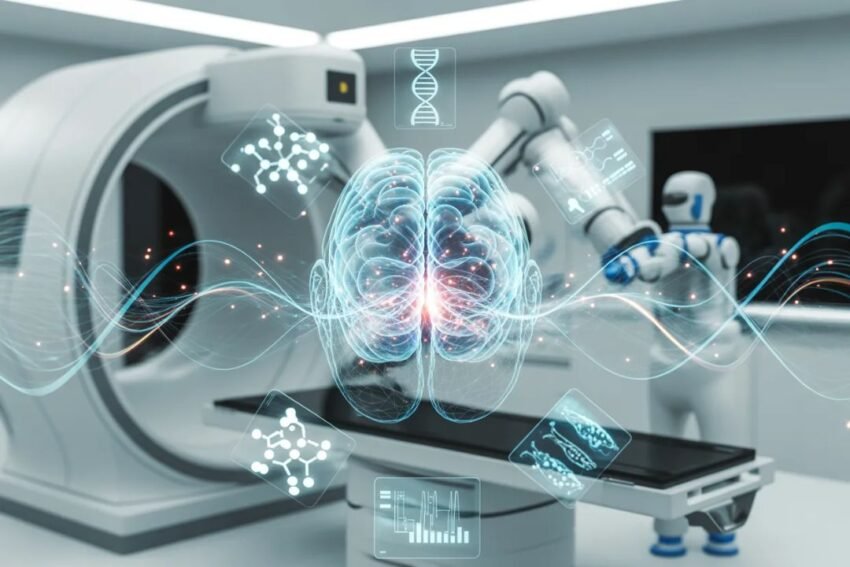
Artificial Intelligence (AI) is rapidly transforming the healthcare industry, bringing groundbreaking changes to how diseases are diagnosed, treated, and prevented. In 2026, AI is no longer a supporting tool—it has become a central pillar of modern healthcare systems. From improving diagnostic accuracy to enabling personalized treatments and streamlining hospital operations, AI is reshaping the patient experience and redefining clinical workflows.
This comprehensive, SEO-optimized article explores the benefits, challenges, and future possibilities of AI in healthcare, providing a clear understanding of its growing impact.
Introduction to AI in Healthcare
AI in healthcare refers to the use of machine learning algorithms, data analytics, and automation technologies to mimic human intelligence in medical settings. These systems analyze vast amounts of medical data, recognize patterns, and assist healthcare professionals in making faster and more accurate decisions.
Healthcare organizations worldwide are increasingly adopting AI to address key challenges such as rising costs, staff shortages, and the need for improved patient outcomes.
Key Benefits of AI in Healthcare
AI is delivering measurable improvements across multiple areas of healthcare. Below are the most important benefits:
1. Improved Diagnostic Accuracy
AI-powered diagnostic tools can analyze medical images, lab results, and patient records with remarkable precision.
How It Helps:
- Detects diseases at earlier stages
- Reduces human error in diagnosis
- Enhances radiology and pathology workflows
For example, AI can identify subtle abnormalities in imaging scans that may go unnoticed by clinicians, leading to earlier and more effective treatment.
2. Personalized Treatment Plans
AI enables personalized or precision medicine by analyzing individual patient data, including genetics, lifestyle, and medical history.
Advantages:
- Tailored therapies for each patient
- Improved treatment success rates
- Reduced side effects
This approach moves away from the “one-size-fits-all” model, ensuring patients receive the most effective care.
3. Faster Drug Discovery and Development
Traditional drug discovery processes can take years and cost billions of dollars. AI significantly accelerates this process.
Key Benefits:
- Identifies potential drug candidates quickly
- Predicts drug interactions and outcomes
- Reduces research and development costs
AI is helping pharmaceutical companies bring life-saving drugs to market faster than ever before.
4. Enhanced Patient Care and Experience
AI-powered tools improve patient engagement and overall care quality.
Examples:
- Virtual health assistants
- AI chatbots for medical queries
- Automated appointment scheduling
Patients can receive instant support, reducing wait times and improving satisfaction.
5. Remote Patient Monitoring
Wearable devices and AI-driven apps allow continuous monitoring of patients’ health.
Capabilities:
- Real-time tracking of vital signs
- Early detection of health issues
- Better chronic disease management
This is particularly beneficial for elderly patients and those with long-term conditions.
6. Operational Efficiency and Cost Reduction
AI helps healthcare organizations streamline operations and reduce costs.
Applications:
- Automating administrative tasks
- Managing hospital workflows
- Optimizing resource allocation
This allows healthcare providers to focus more on patient care rather than paperwork.
7. Predictive Analytics for Preventive Care
AI uses predictive analytics to identify potential health risks before they become serious.
Benefits:
- Early intervention
- Reduced hospital admissions
- Better long-term health outcomes
Preventive care is becoming a key focus area thanks to AI capabilities.
Challenges of AI in Healthcare
Despite its advantages, AI adoption in healthcare comes with several challenges that must be addressed.
1. Data Privacy and Security
Healthcare data is highly sensitive, and AI systems rely on large datasets.
Concerns:
- Risk of data breaches
- Unauthorized access to patient information
- Compliance with regulations like HIPAA
Ensuring strong cybersecurity measures is critical.
2. Bias and Ethical Issues
AI systems can produce biased results if trained on incomplete or unrepresentative data.
Risks:
- Inequality in treatment recommendations
- Misdiagnosis in certain populations
- Ethical concerns in decision-making
Developers must ensure fairness and inclusivity in AI models.
3. High Implementation Costs
Integrating AI into healthcare systems requires significant investment.
Challenges:
- Infrastructure upgrades
- Staff training
- Ongoing maintenance
Smaller healthcare facilities may struggle to adopt AI technologies.
4. Lack of Transparency
Some AI systems operate as “black boxes,” making it difficult to understand how decisions are made.
Impact:
- Reduced trust among healthcare professionals
- Difficulty in validating AI recommendations
Explainable AI is essential for wider adoption.
5. Regulatory and Legal Issues
Healthcare is a highly regulated industry, and AI technologies must comply with strict standards.
Issues:
- Approval processes for AI tools
- Liability in case of errors
- Evolving regulations
Clear guidelines are needed to ensure safe and effective use.
6. Dependence on Technology
Over-reliance on AI may reduce human oversight in critical medical decisions.
Concern:
- Potential loss of clinical judgment
- Risk of system failures
AI should complement—not replace—human expertise.
Future Possibilities of AI in Healthcare
The future of AI in healthcare is full of exciting possibilities. As technology continues to evolve, its impact will become even more profound.
1. Fully Integrated Smart Hospitals
Hospitals of the future will use AI to manage everything from patient admissions to treatment plans.
Features:
- Automated workflows
- AI-assisted decision-making
- Real-time patient monitoring
This will improve efficiency and reduce human error.
2. AI-Driven Precision Medicine
Advancements in genomics and AI will enable highly personalized treatments.
Potential:
- Customized therapies based on DNA
- Early detection of genetic disorders
- Targeted drug development
Precision medicine will become the standard of care.
3. Advanced Robotic Surgery
AI-powered surgical robots will become more autonomous and precise.
Benefits:
- Increased surgical accuracy
- Reduced recovery times
- Improved patient outcomes
Surgeons will work alongside intelligent machines for better results.
4. Global Healthcare Accessibility
AI will help bridge the gap in healthcare access worldwide.
Innovations:
- Low-cost diagnostic tools
- Mobile health applications
- Remote consultations
This will benefit underserved and rural populations.
5. Continuous Health Monitoring
AI combined with wearable technology will enable 24/7 health monitoring.
Capabilities:
- Early disease detection
- Personalized health insights
- Preventive care recommendations
Healthcare will shift from reactive to proactive.
6. AI and Mental Health Support
AI-powered platforms will play a major role in mental health care.
Examples:
- Virtual therapy assistants
- Mood tracking applications
- Early detection of mental health conditions
This will improve access to mental health services.
SEO Keywords Included
AI in healthcare, benefits of AI in healthcare, challenges of AI in healthcare, future of AI in healthcare, artificial intelligence in medicine, AI patient care, healthcare AI trends 2026, AI diagnostics, AI medical technology.
Conclusion
Artificial Intelligence is revolutionizing healthcare by improving diagnostics, personalizing treatments, and enhancing patient care. While challenges such as data privacy, bias, and regulatory issues remain, the potential benefits far outweigh the risks.
As we move further into 2026 and beyond, AI will continue to evolve and integrate into every aspect of healthcare. The future promises smarter hospitals, more accurate diagnoses, and better patient outcomes—all driven by the power of AI.