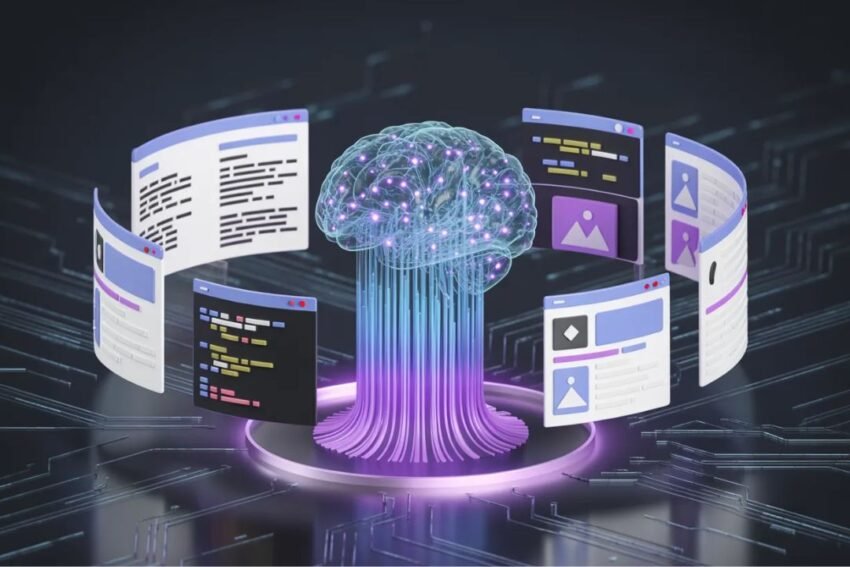
Artificial Intelligence (AI) is revolutionizing content creation in 2026, making it faster, smarter, and more accessible. From blog writing and social media posts to videos and graphics, AI is now a powerful partner for creators, marketers, and businesses. However, while AI offers enormous benefits, it also comes with certain risks and ethical considerations.
This SEO-optimized article explores the benefits, risks, and future trends of AI content creation, helping creators, bloggers, and entrepreneurs understand how to leverage AI responsibly.
🚀 What Is AI Content Creation?
AI content creation refers to using artificial intelligence systems to generate original content across multiple formats, including:
- Text (articles, blogs, scripts, social media posts)
- Images and graphics
- Videos and animations
- Audio and voiceovers
Generative AI models like ChatGPT, Midjourney, and Runway ML are leading this revolution, allowing creators to produce professional-quality content in minutes.
🧠 Benefits of AI Content Creation
1. Increased Productivity
AI can automate repetitive tasks, such as drafting articles, creating social media posts, and editing content, saving creators hours every day.
2. Cost Efficiency
By reducing the need for large teams or outsourced freelancers, AI lowers content production costs significantly.
3. Faster Content Output
AI tools generate content in minutes, allowing businesses and creators to maintain consistent posting schedules across platforms.
4. Enhanced Creativity
AI can generate ideas, provide templates, or create unique visuals, helping creators overcome writer’s or designer’s block.
5. Personalized Content at Scale
AI allows for tailored content based on audience preferences, geographic location, or behavioral data, improving engagement rates.
6. SEO Optimization
Many AI tools can automatically suggest keywords, meta descriptions, and readability improvements to boost search engine rankings.
⚠️ Risks and Challenges of AI Content Creation
While AI offers many benefits, creators must be aware of potential risks:
1. Quality Control
AI-generated content may require careful editing to ensure clarity, accuracy, and relevance.
2. Ethical Concerns
AI-generated content can unintentionally produce misinformation, biased outputs, or inappropriate material if not monitored.
3. Plagiarism Risks
AI may replicate existing content or generate outputs that are too similar to other sources, requiring verification and originality checks.
4. Over-Reliance on AI
Relying solely on AI can limit creativity and reduce the personal touch that human creators bring to content.
5. Security and Privacy
Using AI tools may involve sharing sensitive data, which requires secure handling and compliance with privacy regulations.
✍️ How AI Is Changing Content Formats
1. Text and Blogging
AI tools like ChatGPT and Jasper AI can generate blog posts, scripts, and articles optimized for SEO. Writers can now create first drafts in minutes and focus on editing and personalization.
2. Images and Graphics
AI image tools like Midjourney, DALL·E, and Canva AI allow creators to produce professional visuals for blogs, social media, and marketing campaigns without advanced design skills.
3. Video Content
AI video tools such as Runway ML, Synthesia, and HeyGen can produce videos from scripts or text prompts, including automated editing, voiceovers, and AI avatars.
4. Audio and Podcasts
AI voice generators can create realistic narration, audiobooks, and podcasts in multiple languages, eliminating the need for recording equipment.
🌟 Future Trends in AI Content Creation
1. Hyper-Personalized Content
AI will create content tailored to individual users in real time, improving engagement and conversion rates.
2. Full Multimedia Automation
Future AI tools may generate end-to-end content packages—text, images, videos, and audio—fully automated for campaigns or social media.
3. Collaborative AI Assistants
AI will increasingly act as a co-creator, assisting human creators while enhancing originality and creativity.
4. Ethical AI Integration
AI platforms will adopt stricter ethical frameworks, ensuring responsible content creation, bias reduction, and fact-checking.
5. AI in Marketing and eCommerce
From product descriptions to ad copy, AI will streamline digital marketing, enabling faster, more efficient campaigns at scale.
🧩 Best Practices for Safe and Effective AI Content Creation
- Review AI Outputs: Always edit AI-generated content for accuracy and tone.
- Maintain Originality: Check AI content for plagiarism and unique ideas.
- Balance AI and Human Creativity: Use AI as a tool, not a replacement.
- Stay Ethical: Avoid generating misleading, harmful, or biased content.
- Protect Data Privacy: Only use secure AI platforms and follow privacy regulations.
✅ Conclusion
AI content creation in 2026 is a game-changer for creators, bloggers, and businesses. It provides speed, efficiency, and creative freedom, while also introducing challenges that require careful management.
By understanding the benefits, risks, and emerging trends, creators can leverage AI responsibly to produce high-quality, engaging, and personalized content at scale.
Key takeaway: AI is not replacing human creativity—it is enhancing it, allowing content creators to focus on strategy, storytelling, and originality while letting AI handle repetitive and time-consuming tasks.