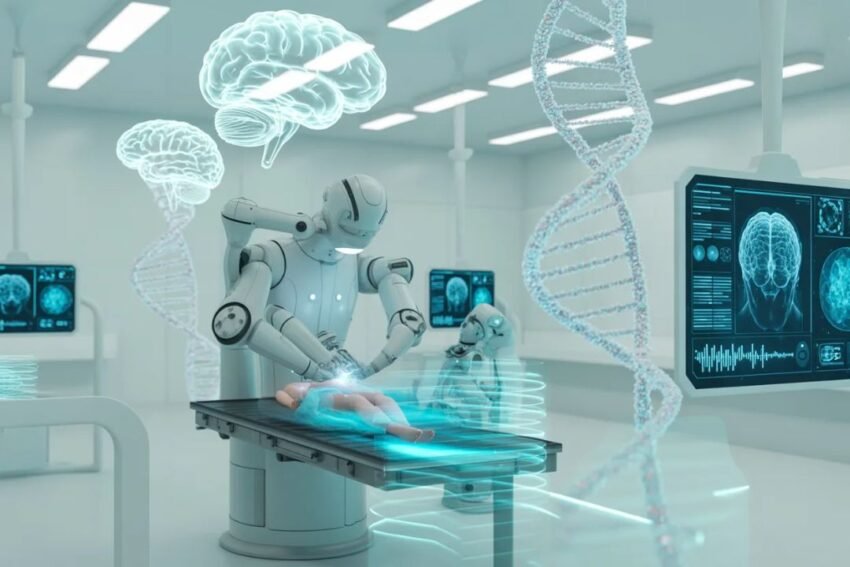
Artificial Intelligence (AI) continues to reshape healthcare in 2026, driving a new era of precision, efficiency, and patient-centered care. From diagnosing diseases earlier to delivering personalized treatments and improving hospital operations, AI innovations are transforming how healthcare providers interact with patients and make clinical decisions.
In this article, we explore the top 10 AI innovations revolutionizing medical diagnosis and patient care, highlighting how these technologies are improving outcomes, reducing costs, and enhancing the overall healthcare experience.
1. AI-Powered Medical Imaging and Diagnostics
AI-driven imaging tools are among the most impactful innovations in healthcare. These systems analyze X-rays, MRIs, CT scans, and ultrasounds with exceptional accuracy.
Key Benefits:
- Early detection of diseases such as cancer and stroke
- Reduced diagnostic errors
- Faster turnaround times
AI algorithms can identify patterns that may be missed by human eyes, allowing clinicians to detect conditions at earlier, more treatable stages.
2. Predictive Analytics for Early Disease Detection
Predictive analytics uses AI to analyze patient data and identify potential health risks before symptoms appear.
Applications:
- Predicting heart disease and diabetes
- Identifying high-risk patients
- Preventing hospital readmissions
This innovation shifts healthcare from reactive treatment to proactive prevention, significantly improving long-term outcomes.
3. Personalized Medicine and Precision Treatment
AI enables personalized healthcare by tailoring treatments based on an individual’s genetics, lifestyle, and medical history.
Examples:
- Customized cancer therapies
- AI-guided medication selection
- Individualized treatment plans
This approach increases treatment effectiveness and minimizes side effects.
4. AI-Powered Virtual Health Assistants
Virtual assistants powered by AI are improving patient engagement and accessibility.
Features:
- 24/7 symptom checking
- Medication reminders
- Appointment scheduling
These tools help patients manage their health more effectively while reducing the burden on healthcare providers.
5. Remote Patient Monitoring with Wearable Devices
Wearable devices integrated with AI allow continuous monitoring of patient health.
Capabilities:
- Tracking heart rate, blood pressure, and oxygen levels
- Detecting abnormalities in real time
- Sending alerts to healthcare providers
This innovation is particularly valuable for managing chronic diseases and elderly care.
6. Natural Language Processing (NLP) for Clinical Documentation
AI-powered NLP tools are transforming how medical records are created and managed.
Benefits:
- Automated transcription of doctor-patient conversations
- Efficient medical record management
- Reduced administrative workload
Doctors can now spend more time with patients instead of paperwork.
7. AI in Drug Discovery and Development
AI is accelerating the discovery of new drugs by analyzing complex biological data.
Advantages:
- Faster identification of drug candidates
- Reduced research costs
- Improved success rates in clinical trials
This innovation is helping bring life-saving treatments to market more quickly.
8. Robotic Surgery with AI Assistance
AI-powered robotic systems are enhancing surgical precision and safety.
Benefits:
- Minimally invasive procedures
- Reduced complications
- Faster patient recovery
Surgeons can perform complex operations with greater accuracy and control.
9. Clinical Decision Support Systems (CDSS)
AI-driven CDSS tools assist healthcare professionals in making informed decisions.
Features:
- Evidence-based recommendations
- Real-time patient data analysis
- Risk assessment tools
These systems act as intelligent assistants, helping clinicians deliver better care.
10. AI Chatbots for Patient Interaction and Triage
AI chatbots are transforming patient communication and triage processes.
Uses:
- Answering patient queries
- Providing medical guidance
- Directing patients to appropriate care
This reduces wait times and ensures patients receive timely support.
Benefits of AI Innovations in Healthcare
AI innovations are delivering significant benefits across the healthcare ecosystem:
- Improved Diagnostic Accuracy: Reducing errors and enhancing early detection
- Enhanced Patient Care: Personalized and efficient treatment plans
- Operational Efficiency: Automation of administrative tasks
- Cost Reduction: Lower healthcare expenses
- Better Accessibility: Expanding care to remote and underserved areas
Challenges to Consider
While AI offers numerous advantages, it also presents challenges:
- Data privacy and security concerns
- Risk of algorithmic bias
- Regulatory and compliance issues
- Need for human oversight
Addressing these challenges is essential for the responsible adoption of AI in healthcare.
The Future of AI in Diagnosis and Patient Care
The future of AI in healthcare looks promising. Emerging trends include:
- Integration of AI with genomics
- Real-time health monitoring through IoT devices
- Advanced predictive analytics
- Fully automated diagnostic systems
AI will continue to evolve as a powerful partner for healthcare professionals, enhancing—not replacing—human expertise.
Conclusion
Artificial Intelligence is revolutionizing medical diagnosis and patient care in 2026. These top 10 innovations demonstrate how AI is improving accuracy, efficiency, and accessibility in healthcare.
As technology advances, the collaboration between AI systems and healthcare professionals will lead to better patient outcomes and a more sustainable healthcare system. The transformation is already underway, and its impact will only continue to grow in the years ahead.