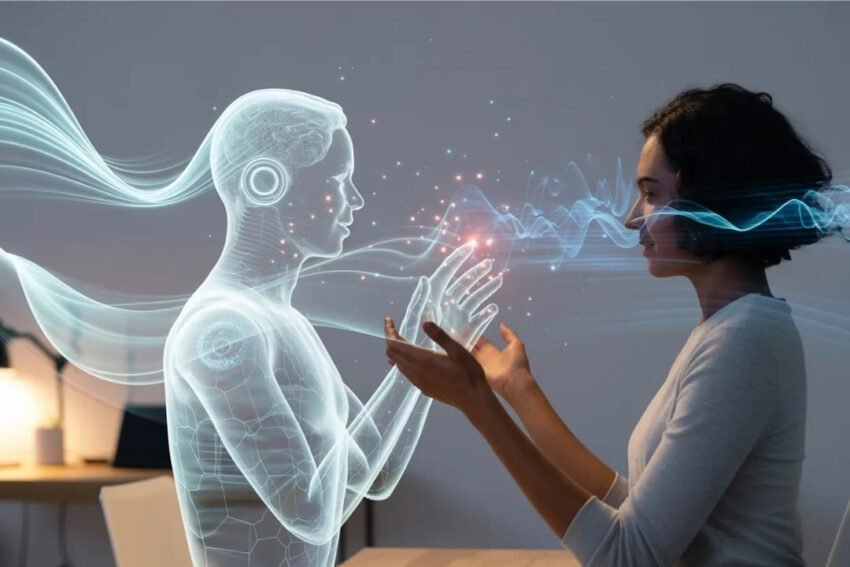
In 2026, Voice AI and virtual assistants are no longer just novelty tools—they are becoming central to how humans communicate with technology. By combining natural language processing (NLP), machine learning, and speech recognition, these AI systems are transforming digital communication across work, homes, healthcare, and entertainment.
This article explores the next evolution of digital communication, highlighting the capabilities, benefits, real-world applications, and future trends of Voice AI and virtual assistants.
🚀 Understanding Voice AI and Virtual Assistants
Voice AI refers to technology that understands and responds to spoken language. Virtual assistants are AI-powered systems that use Voice AI to interact, assist, and automate tasks for users.
Key characteristics of modern Voice AI and virtual assistants include:
- Conversational understanding: Recognizes context, intent, and nuance in speech
- Real-time responsiveness: Offers instant solutions and feedback
- Personalization: Learns user preferences to tailor interactions
- Integration: Works across devices, apps, and ecosystems
Examples in 2026:
- Siri – Personal assistant for iOS devices and smart homes
- Alexa – Smart home control and lifestyle management
- Google Assistant – Multitasking and information retrieval
- ChatGPT – Advanced voice-enabled assistant for productivity and creativity
🧩 How Voice AI is Changing Digital Communication
1. Hands-Free Interaction
- Users can control devices, apps, and smart homes without touching a screen.
- Ideal for multitasking, accessibility, and faster task completion.
2. Conversational Interfaces
- Voice AI allows for natural, human-like conversations instead of menu-based commands.
- Reduces friction in digital communication and makes technology more intuitive.
3. Real-Time Personalization
- Voice AI remembers preferences and anticipates user needs.
- Examples: Adjusting room temperature, suggesting reminders, or reading personalized news updates.
4. Multilingual and Cross-Device Communication
- Supports multiple languages, dialects, and devices.
- Bridges communication gaps for global users.
🌟 Benefits of Voice AI and Virtual Assistants
- Efficiency: Automates repetitive tasks like scheduling, messaging, and reminders
- Accessibility: Supports visually impaired or mobility-limited users
- Enhanced Productivity: Integrates with apps to streamline workflows
- Personalization: Adapts to user habits for tailored suggestions
- Connectivity: Syncs devices, apps, and smart environments seamlessly
🏆 Real-World Applications
1. Workplace Communication
- Voice AI enables hands-free email drafting, meeting scheduling, and task management.
- AI can summarize meetings or generate action items automatically.
2. Smart Homes
- Virtual assistants manage lights, climate, appliances, and security systems.
- Users can interact naturally with devices without manual input.
3. Healthcare
- Voice AI helps patients schedule appointments, track symptoms, and receive medication reminders.
- Provides virtual checkups and personalized wellness guidance.
4. Education
- AI tutors engage in verbal instruction, practice exercises, and homework assistance.
- Teachers can automate grading and interactive lessons.
5. Entertainment
- Personalized music, video, and news recommendations through voice commands.
- Enables immersive gaming and interactive experiences with conversational AI.
⚠️ Challenges and Considerations
- Privacy and Security
- Voice assistants capture audio data, which must be securely stored and processed.
- Users must trust platforms with sensitive information.
- Accuracy and Context
- Misunderstanding commands or accents may cause errors.
- Continuous improvement in NLP models is necessary.
- Over-Reliance
- Dependence on AI for communication or decision-making may reduce human critical thinking.
- Bias and Inclusivity
- AI models must avoid cultural or linguistic biases to ensure fair interaction.
🔮 Future Trends in Voice AI and Virtual Assistants
- Emotionally Aware AI
- AI will detect user emotions through tone, pace, and speech patterns.
- Enables empathetic, context-sensitive responses.
- Hyper-Personalized Voice Experiences
- Anticipates needs and adapts interactions in real time.
- Multimodal AI Communication
- Combines voice, gestures, facial expressions, and augmented reality for immersive interaction.
- AI Collaboration
- Voice assistants will co-create content, automate workflows, and assist in decision-making.
- Decentralized Privacy-Focused AI
- Local data processing ensures privacy while maintaining smart capabilities.
🧩 Tips for Using Voice AI Effectively
- Start Small: Use AI for basic tasks like reminders or music control
- Integrate Gradually: Link AI to apps, devices, and smart home systems
- Maintain Oversight: Regularly review AI suggestions for accuracy
- Balance Automation and Human Judgment: Let AI assist but not replace critical thinking
- Stay Updated: AI capabilities evolve rapidly—explore new features regularly
✅ Conclusion
Voice AI and virtual assistants in 2026 represent the next evolution of digital communication, making interactions more natural, personalized, and efficient. From work and healthcare to smart homes and entertainment, these tools are enhancing productivity, accessibility, and creativity.
The future promises even smarter, emotionally intelligent, and multimodal AI assistants that will anticipate needs, communicate empathetically, and seamlessly integrate into everyday life.
Key takeaway: Voice AI is not just about convenience—it’s transforming the way humans interact with technology, information, and each other.